Different Horizons

“World stock markets have rounded off a wild and difficult year,” the article began, pointing to multiple uncertainties in a polarised US political system, a crisis–ridden Eurozone and a rapidly slowing Chinese economy.

Does that sound familiar? That was from a calendar year wrap–up of markets published by BBC News on 30 December 2011, more than seven years ago.1 The report itself was accurate enough. In fact, it was a fair reflection of some of the sentiment dogging financial markets at that time.

The US had lost its ‘AAA’ credit rating that year after a congressional deadlock over the debt ceiling. In the Eurozone, the focus was on the heavily indebted members Portugal, Ireland, Italy, Greece and Spain and the future of the currency union.

In China, the government was clamping down on lending and investment to cool inflation. Now, seven years on, markets confront a new set of uncertainties—trade tensions between the US and China, the fate of Brexit, domestic political polarisation in the US, the rise of populist movements in Europe and sundry geopolitical flashpoints.

Yet, in the time between the 2011/12 headlines above and the 2018/19 ones, global equity markets (as measured by the MSCI World IMI Index in Australian dollar terms) have risen for seven consecutive years for an annualised return of 15%.

To be sure, those returns over seven years have not been distributed evenly. In 2018, for instance, global equity markets were as good as flat in Australian dollar terms, while in 2013 they gained by close to 50%. But the point is that markets do not move in a straight line.

News travels quickly and prices can adjust in an instant, up or down. When there is more uncertainty, there is often more volatility. Individuals who seek to anticipate what markets will do next based on today’s news just add unnecessary anxiety and risk to the process.

By necessity, the media’s horizon when it comes to financial news is very short term. If you are publishing in real-time, your need for fresh material is insatiable. It’s not that these headlines are wrong. But for an individual investor, whose horizon is measured in years or even decades, day–to–day news is less relevant.


1. ‘World Stock Markets End Tumultuous Year Well Down’, BBC News, 30 December 2011

Author: Jim Parker, Vice President of Dimensional Fund Advisors

Industry Super Funds – illiquid asset valuations called into question

In recent E-News articles a number of issues in relation to Industry Superannuation funds have been raised.  Whilst they have been many and varied they can generally be characterised under the term ‘lack of transparency’.  Some of the more notable areas we have focused on have been;

• inaccurate definition of growth assets as defensive to ‘game’ the returns tables
• non-disclosure of bond credit risk
• non-disclosure of alternative assets use
• difficulties in understanding the specific assets invested in
• use of performance fees and the inaccurate reporting of true costs
• and finally how unlisted assets are valued

The union dominated sector has been in the news again recently with serious questions being raised as to how the funds are valuing unlisted property assets in their portfolios.

Rest Super reported in December 2018 that they had lowered their discount rate from 8.45% to 8.29%, effectively with a stroke of a pen, increasing the value of illiquid property assets in their portfolios. Asset values rise as discount rates fall.

A Discount Rate is comprised of a ‘risk free’ rate of return (usually based on an Australian Government bond return) plus a ‘risk premium’. The first component is easy to identify and is publicly available and independent. The second component is to a great extent quite subjective and, in the worst case scenario, is open to manipulation.

Sean Collins, lead partner for valuations at KPMG said “If you look back to 2015-16, we certainly went through a period of declining discount rates. As 2017 unfolded and we flowed into 2018, I think rates have bottomed out. They’ve stayed relatively flat over that period.”

The decision to lower their discount rates puts Rest Super at odds with this assessment. Most Industry Super funds do not disclose their discount rates and are not legally required to do so. Given the extent to which values can be ‘gamed’ this regulatory omission is quite astonishing.

The Industry Super fund, Australian Super, used to disclose its discount rates however in its 2017-18 financial statements this information was omitted. However it did disclose that it held 15 assets worth $9.16 billion. This compares with 2016-17 where it held 18 assets worth $9.03 billion.

The remainder of the main Industry Super funds, First State, QSuper, Unisuper, SunSuper, Cbus, Hesta, State Super and Host Plus, do not disclose their discount rates.

Industry Super public affairs director, Matthew Linden said “Trustees are required to comply with relevant superannuation laws and prudential standards and guidance on the valuation of assets”. He added “this involves valuing unlisted assets at arm’s length from the trustee by independent valuers”. But it begs the question, who employs the valuers? In this situation, the Industry Super fund, employs the valuer to value assets that are included in the Industry Super fund’s portfolios.

This arrangement is clearly a conflict of interest.

KPMG’s annual valuation practices survey found that most valuers adopted a risk-free rate of 2.5% – 3% and the majority of respondents adopted a market risk premium of between 6% and 6.5%. This implies a Discount Rate of between 8.5% and 9% which is materially higher than the rate declared by Rest Super.

Why is this such an issue?

As we raised in our last E-News article entitled “Do Industry super fund investors know what they’re investing in?”, major Industry Super funds hold between 26% and 45% of their member portfolios in unlisted assets. With such a large allocation, getting the assets valued accurately takes on significant importance.

Add to this the fact that performance league tables are used to promote and market funds (think the ‘compare the pair’ ads) and one can easily see why the direct employment of valuers by Industry Super funds (or any super fund) should be banned.

Sunlight is the best disinfectant

In the interest of transparency, investor awareness and a complete removal of the current conflicted scenario that exists in the valuation of unlisted illiquid property assets, super funds should not directly employ the valuer to value these assets and all discount rates should be published on an asset by asset basis. One would hope that regulators would see this as an obvious course of action however nothing to date has occurred to suggest this is the case.

With it highly probable our next government will be Labor, it is unfortunately even less likely.

Santa Clause rally arrives in January

Christmas was especially challenging with markets around the world experiencing significant falls in the final quarter of 2018.

On October 1st, 2018 the Australian ASX 200 closed at 6,172.  It fell to 5,467 on December 21st, a fall of 705 points or 11.4%.   Other major indices experienced similar falls or worse.  What precipitated such dramatic moves when seemingly corporate earnings, particularly in the US, were quite solid?

While issues such as the US/China trade tensions, Brexit, Italian debt discussions with the EU and finally global growth more generally were causing concern, the main culprit was Jerome Powell, the Federal Reserve Chairman who on October 3rd 2018 said;

“The really extremely accommodative low interest rates that we needed when the economy was quite weak, we don’t need those anymore. They’re not appropriate anymore. Interest rates are still accommodative, but we’re gradually moving to a place where they will be neutral,” he added. “We may go past neutral, but we’re a long way from neutral at this point

Market participants around the world were alarmed at this statement particularly when they had become accustomed to immediate past Federal Reserve Chairman Janet Yellen, delivering more measured commentary.  US President, Donald Trump berated Jerome Powell publicly and the Fed Chairman was under significant pressure from all sides to qualify exactly what the Fed’s position was given that inflation in the US was and remains quite benign.

On January 4th 2019, Mr Powell did just that, saying the Federal Reserve would take a “patient approach to monetary policy tightening”. Markets interpreted this to mean that not only was an accelerated series of rate rises off the table, but the Federal Reserve may well not raise rates as much as it had stated.  In just 3 months its position had changed quite significantly.

In addition, there was a détente of sorts between the US and China on trade talks which helped ease market concerns. These talks are ongoing and remain positive, though time will tell.

Market movement since Christmas-eve


So what’s the lesson?  The future will incorporate a series of unforeseen events that are impossible to predict.  Thankfully, you don’t need to know the future – what you do need however is to stay disciplined and not allow emotion to replace rational decision making.

As clients of APC this message is re-enforced because it has been proven time and time again to be true.  As you can see from the chart below, there are always events that can cause investor concerns.  This is called by some commentators as the ‘Wall of Worry’.  However as you can see, taking a long term approach has rewarded the patient investor.


Staying The Course’ is easy to say but sometimes very hard to do as humans are not wired in this way. We naturally feel the need to do ‘something’. When markets are falling, we feel we must act…. sell, move to a more defensive portfolio. When markets are rallying, we feel that we don’t want to ‘miss out’ so we must buy.

If you think this through though, the behaviour of focusing on the short term movement of share markets leads to selling in a falling market whilst buying in a rising market – selling low and buying high – exactly what you shouldn’t do.

Since 2001, if you invested in the top 300 companies in Australia (ASX300 Index) and made no changes to your portfolio, you’d have generated an average return of 8.3% per annum but if you missed just the 15 best days during that whole period your return would have fallen to 4.2% per annum – nearly half!

Your strategy, developed with APC, is long term by design.  We review that strategy during your Regular Planning Meetings making amendments as required.

Australian Private Capital believes that markets work.  They are efficient at determining the price of a share based on available information about that company.  Markets will do what they do and there will be good times and bad, as the chart demonstrates.  But through them all, our primary focus should remain long term and we should not allow the short term ‘noise’ to cloud our judgement.

There can be no better example of this than the significant market fluctuations we have all  experienced in recent times.

As always, if there is anything you wish to discuss about your strategy or portfolio we encourage you to make contact with your APC Advice team.

Sustainability and Investment

As the globe faces a range of sustainability challenges, there is an understandably growing awareness and interest within the community when it comes to the alignment of personal values or beliefs with one’s own investments.

These global challenges include but are not limited to; resource scarcity, population pressure, social disparity, land and water degradation; the list goes on.  Various industries will face change as a matter of necessity and once more expensive sustainable pathways are approaching a tipping point from a scale and cost perspective.  At this point Ethical style investment and sustainability themes become very much linked.

As discussed at our recent Briefing at the NGV in August, the landscape in this investment space has evolved rapidly in recent years with many styles and structures available and widely marketed.  While this is of course a positive, navigating and making sense of the options can be challenging.

APC recognises that these themes will be of primary importance to some of our clients.  Ensuring we can talk to you about how these concepts translate through various investment types will be important, as well as being in a position to put potential options forward where there is an interest.


What have we considered?

A core component of APCs investment philosophy is that diversification is essential.  In considering various sustainability-focussed investments, it was important to ensure that this and other key tenets are not “traded-off” in the pursuit of another outcome.  This meant looking to managed funds who invest in a broad number of underlying companies and sectors.

The definition of what is sustainable or ethical can be interpreted quite broadly at the investment level.   It can for example mean a particular focus on the efficient use of resources, lowering average carbon emissions across the portfolio, the delivery of essential goods and services, more effective waste management and so on.  It may also mean excluding particular companies or sectors for negative behaviours (think sectors like weaponry production, tobacco, gaming, big polluters, etc) and focussing on those companies or sectors whose activities and practices it is believed will ultimately replace existing unsustainable practices and are contributing positively in some way.

We considered investment managers who – together with having a strong track record and investment fundamentals – integrated “ESG” factors into their stock selection and investment process.  That is Environmental, Social and Governance.


Examples of the ESG factors


How can these themes be incorporated into portfolios?

We have developed a sustainability investment focussed ‘pod’ which can be incorporated into or alongside the existing Classic Portfolio approach.  This group of managed funds are global equities based.  The pod seeks to blend differing styles and approaches to sustainability and portfolio construction thereby delivering what we believe to be an acceptable level of diversification.

APC commits to ongoing investment consideration, so will continually look at what is available and what might assist our clients to best meet their individual objectives.   That may also mean looking beyond the global equity space specifically in time.


Where to from here

APCs investment philosophy remains unchanged, that is that discipline is rewarded and practicing smart diversification is essential.  A portfolio can however be tilted to better align with certain values without necessarily taking on undue investment risk.

The incorporation of these investments will be very much individual so if there is an interest or you would simply like to know more, please talk to us at your Regular Planning Meeting.

KEEP CALM AND CARRY ON…. FACTS OF INVESTMENT

So here we are, near 10 years after the Global Financial Crisis (GFC) and experiencing the longest ‘bull market’ in history – surely it’s going to end … surely?  The answer is ‘yes’, it will, but should that impact upon your investment decisions?

Let’s take a look at some key facts about investing that will hopefully alleviate some concerns that you may have about where we currently are situated in the ‘investment cycle’.


Whilst the above illustrates the share market movements in the US, there has been a strong correlation over time between the US share market and the Australian share market and as such, the darker grey areas representing market corrections in the US would also align (to a large degree) with corrections in the Australian share market. 

What this graphic shows is that share market ‘corrections’ (being a decline of 10% or more) are quite commonplace and are often over before you even know it with only around 1 in 5 corrections turning in to a ‘bear market’ (a period of two or more months of declining share prices).

The problem that has confounded investors for so long is knowing when a fall in the share market is a somewhat common ‘correction’ or is it the start of a more serious but less common ‘bear market’?

And the truth of it is that nobody can predict consistently whether the market will rise or fall in the short term.

It would be nice to think that there are ‘investment gurus’ out there that can predict market movements but the fact is that this is just not the case – at least not consistently.  It is difficult to observe any rhyme nor reason to these annualised returns:


What the above illustrates is that it is nearly impossible to predict the market performance in any given year however history tells us it will be up more than it is down.  While it may be tempting to take a tactical approach to miss or limit those downside movements, staying the course will see you rewarded over time.  In fact, as will be shown further below, trying to miss the downside poses a real risk and can materially detract from your overall performance in the (more likely) event of getting it wrong.

The media (and many fund managers) suggest that they are ‘in the know’ with quotes like these that I’m sure you have been exposed to over the years:

  • ‘Asian Economic Outlook “Bleak”’, 30 March, 2009; CNN
  • ‘Housing Market a “Time Bomb”’, 15 June, 2010; The Australian
  • ‘Stock Markets Face “Bloodbath”’, 26 Aug, 2010; Telegraph UK
  • ‘Europe’s Debt Crisis Puts Australia at Risk’, 10 Nov, 2011; News.com.au
  • ‘Australia May Be on the Brink of a New Collapse’ 18, Aug, 2013; Guardian
  • ‘Are We Facing Another Financial Crisis?’, 18 Nov, 2014; The Conversation
  • ‘Australia Faces 50% Chance of Recession By 2017’, 25 March 2015; SMH
  • ‘Why China’s Stock Market Meltdown Could Hurt Us All’, 8 July, 2015; Time
  • ‘Brexit to Bring Recession and Contagion’, 27 June, 2016; Business Insider
  • ‘A Trump Win Would Sink Stocks’, 24 Oct, 2016; CNN
  • ‘Storm that May Cause the Next Crash is Brewing’, 16, Oct 2017’; The Street


The fact is however that this is all just ‘noise’ designed to do one thing; to get your eyeballs to hover over the advertising that surrounds the ‘news’ article. It is the paying advertisers who are the real customers of the media, not you who read or watch the news.  So, the bigger the headline, the bigger the advertising sales.

So what can we do, as investors, to minimise the risk of inevitable market falls?  Investing comes with risks but having a strategy in place for market downturns is critical and you need the discipline to follow it. 

“To invest successfully over a lifetime does not require a stratospheric IQ, unusual business insight or inside information.  What’s needed is a sound intellectual framework for making decisions and the ability to keep emotions from corroding that framework.” 

(Warren Buffett – the “Oracle of Omaha”)

The fact is, once a bear market ends, the following years can provide some significant investment return ‘rebounds’:


And these crucial market gains often occurring quickly – miss these gains, and you may as well have stayed in cash:


Unfortunately, nobody rings a bell at the top or the bottom of market cycles so the only way to access the critical market ‘up’ days is to stay invested otherwise your investment returns can be slashed – there would be nothing worse than riding the market all the way to the bottom only to then switch to cash and miss the upside returns.

For some, it can be hard to hold your nerve and stay invested (let alone invest more) during times of market volatility as emotions are high and it is human nature to ‘do something, anything’. 

APC’s advice is to accept that markets will rise AND fall and remain committed to the strategy that was put in place during less emotional times.

SPIVA Scorecard: The Index Wins Again

The annual review of Active fund managers against their relevant benchmark to June 2018 was released recently by leading ratings agency S&P. The S&P Indices vs Active Management or SPIVA report is considered to be the leading industry report when considering the efficacy of active managers who try to ‘beat’ the market through either market timing or stock selection.

Long term clients of APC will know that for many years we have relied on the ‘evidence’ to underpin our investment methodology of tilting our portfolios to Small and Value companies. This latest report continues to support our view that these sectors deliver superior performance to Large companies and the broader market over time and that active management does not consistently deliver superior performance against benchmark after manager fees.

The table below provides a summary of some of the key findings of the report. Note the performance of Small companies over Large (S&P/ASX 200 and S&P Developed ex-Australia LargeMidCap). Also note the percentage of managers who beat their index over 1 year. Over 3 years the percentages fall even further.


The report also looked at performance persistence of outperforming funds, finding that only a minority of high-performing funds could maintain out-performance against the index or peers for three or more years. This supports the theory that ‘active management outperformance’ it is often more luck than skill.

Among the top quartile funds in the 12-month period ending June 2014, only 2.2 per cent maintained a top quartile rank in the following four years and only 4 per cent consistently beat their benchmark over the four years.

Of the 303 Australian funds that outperformed their respective benchmark in the five-year period ending June 2013, only 27.7 per cent continued to outperform in the following five years.

“Overall, results from various evaluation matrices suggest weak performance persistence among top-performing funds in Australia. Actively managed winning streaks are often short-lived,” the report says.

Do Industry Super Fund Investors Know What They’re Investing In?

Author: Robert Sarafov, Research: Loan Do

In our last E-News we published an article entitled ‘What the Royal Commission should have focused on but didn’t’.  It touched on some issues of importance particularly in relation to Industry Super Funds.  In this article we dig a little deeper to shine some light on some specific industry super fund practices and how all is not what it seems.

As an investor there are a few things that are important to know and understand when deciding to invest in, or remain invested in, a financial portfolio asset. 

These include;

  • What is the overall asset allocation of my portfolio?
  • Is the investment risk within my comfort level?
  • What are the specific investments I am invested in?
  • What are the costs of my investment choice?
  • What are my investments returns?

In an article published by ABC News on October 11th, 2018 the Hostplus Balanced Fund was heralded as the #1 ‘Balanced Fund’ in the market to June 30, 2018.

The article headlined ‘No retail funds make the top 10’.  ‘Retail’ in this context means pre-packaged diversified portfolios marketed mainly by Banks, AMP and some others.  As an aside, APC does not use these funds in any way, preferring to use lower cost wholesale investments.

Let’s consider these questions as we look more closely at the Hostplus ‘Default’ Balanced fund.


What is the overall asset allocation of my portfolio?

It is important to understand what is understood to mean ‘balanced’ in the Australian investment marketplace.  It is a portfolio with an allocation to ‘growth’ assets (Shares, Property, Private Equity, Alternatives) of approximately 65%-70%.  The remaining 30% – 35% is allocated to ‘defensive’ assets which the Australian Securities and Investment Commission (ASIC) defines as Cash or Bonds.

What allocation does the Hostplus Default ‘Balanced’ fund allocation look like?  The yellow asset classes are considered by Hostplus to be growth and the blue are considered defensive.


The Hostplus Default Balanced Fund appears to have 75% allocated to growth assets however if you look at what Hostplus characterise as a defensive asset, Infrastructure and Direct Property are included which is simply not accurate.  So this fund now has 90% in growth!

Additionally, it was impossible for APC to determine what ‘Other Assets’ and ‘Credit’ actually are.  What we do know, from the Hostplus Default Balanced Fund allocation is that there is no allocation to the two assets that ASIC actually define as defensive, which is Cash and Fixed Interest assets.  

So in reality, the Hotplus Default Balanced Fund is in fact a ‘High growth’ fund with a similar mix of growth and defensive assets to the APC Classic 100 portfolio.


Is the investment risk within my comfort level?

Given this disparity, Loan Do of APC contacted Hostplus on November 1st to query this and was told

‘PROPERTY AND INFRASTRUCTURE ASSETS ARE CONSIDERED DEFENSIVE DUE TO THE INCOME GENERATING NATURE OF THE PROPERTIES

The position that because an asset generates income is therefore considered a ‘defensive’ asset is absurd.  If this were accurate you’d consider Telstra and the Banks as defensive because of their current high yield! 

Interestingly, on pages 74 and 82 of the Hostplus 2017 Annual Report Hostplus themselves characterise (correctly) that their own property sector investment risk is ‘High’ and that the investor should expect ‘a negative return 4-5 years out of every 20’.  Does that sound defensive?

On the issue of the fact that their default ‘Balanced’ portfolio has no allocation to Cash or Fixed Interest assets at all Loan Do of APC was told ‘CASH AND FIXED INCOME IS 0% AT THE MOMENT BECAUSE THE  PORTFOLIO MANAGERS BELIEVE THAT THERE ARE OTHER INVESTMENTS THAT ARE MORE VALUABLE TO INVEST IN’.

Presumably this is the ‘Other Assets’ that we are unable to find a description of what they actually are.

Given that 90% of Hostplus investors are in their ‘default’ balanced portfolio, do they understand that the ‘Balanced’ fund they are invested in is in fact a ‘High Growth’ fund with very different risk characteristics?

To put this into an APC context, this would be like a client who is invested in a Classic 70 portfolio being changed to a Classic 100 without their knowledge!  It would simply not happen and would be completely inappropriate if it did.


What are the specific investments I am invested in?

As an investor, it is important to be able to understand what you are actually invested in.  This goes beyond a high level understanding of the ‘Strategic Asset Allocation’ of your portfolio to having a deeper knowledge of individual investments that make up your portfolio.  This information should be easy to access and understand.  APC highlights this information in our Regular Planning Meetings.

Hostplus identifies some of this information on page 94 of their 2017 annual report which an investor needs to download and then review.  It includes an investment list for Australian / International equities and Infrastructure. The Private Equity and Property information is high level only with geographic location and overall strategies or sectors covered but no specific investments.  Alternatives, Other Assets and Currency (10% of the portfolio) has no information at all other than a generic series of paragraphs on page 108.

However what is not disclosed anywhere are the specific assets of the Hostplus Default Balanced Fund.  It is simply not possible to understand if you are an investor in this portfolio, beyond a high level strategic asset allocation, what you are actually invested in.

It is a similar experience for other major Industry Super Funds.


Unlisted Assets

In addition to the issue of deceptive asset characterisation, the extensive use  of ‘Unlisted Assets’ in Industry Super needs to be canvassed as an investor.  Loan Do of APC confirmed with Hostplus that 40% of the Hostplus Default Balanced Fund is invested in Unlisted Assets! APC’s own review of the current Strategic Asset Allocation put that figure at 45% (see table below).

Investing in Unlisted Assets is in and of itself not an issue and is a legitimate investment strategy.  However allocating such a significant portion of a portfolio to unlisted assets is something APC would not advise given the importance liquidity and investment flexibility play in a portfolio. Illiquid assets by their very nature are difficult to manage when economies and markets become volatile.  For this reason APC would advise to not allocate more than 15% of a portfolio to this type of investment.

What was also not clear was the valuation methodology being used and its frequency.

Hostplus confirmed they used the Net Asset Value (NAV) methodology but could (or would) not elaborate on the basis used to determine the current market value of unlisted assets in their portfolio. So an investor cannot determine if the value of their share of an unlisted asset in their portfolio is in fact an accurate reflection of the value of that asset in an open market.

An example of how this can play out badly for investors is best illustrated by the Industry Super Fund MTAA which at the height of the GFC had approximately 60% of its portfolio invested in Unlisted assets. Not surprisingly it was top of the performance charts when listed markets were falling in value.  However it went from the top of the performance table soon after the GFC to the bottom quite quickly after the Australian Prudential Regulatory Authority (APRA) introduced new rules to force Industry Super funds to re-value unlisted assets more frequently.  MTAA (and other Industry Super and large corporate funds) simply chose not to revalue unlisted assets while the listed market was falling post the GFC.  In this environment it was easy to understand why relative performance of funds that behaved in this manner was superior but it was a false dawn and many investors got caught.

Are the other large Industry Super Fund Default investment options any different to Hostplus?


What are the costs of my investment choice?

Investment cost is an important consideration.   Many Industry Super funds negotiate with investment managers a lower Indirect Cost Ratio (ICR) in exchange for an investment manager ‘performance fee’.  This was Industry Super’s dirty little secret before regulators forced industry participants to expressly declare it.

Let’s compare the Hostplus Default Balanced Fund and the APC Classic 70’s total investment fees.


* APC’s Investment Management Fee is based on a portfolio balance of $1m.  As portfolio values change this percentage changes.  For example with a portfolio value of $500,000, the APC Investment Management Fee is 0.42%. At $1m the APC Investment Management Fee falls to 0.31% and at $2m to 0.22% beyond which it attracts no Investment Management Fee at all.  The Hostplus fees remain consistent irrespective of portfolio balance.


What are my investments returns?

So, if we take a look of an ‘apples for apples’ comparison or the Hostplus Default Balanced Fund (which we know is a high growth fund) and the APC Classic 100 how do they perform to June 30th 2018?


**Performance is net of all fees with a portfolio value of $1m.

Recently there was an article in The Financial Review titled  ‘Unions Challenge Labor to turf banks out of super’

A statement from the article was of particular interest.

“Industry (Super) fund members enjoy lower fees and are free from conflicted financial advice.  The industry fund investment philosophy emphasises long term value and trustee diligence.”

Let’s deconstruct the various components of this statement;

  • Industry (Super) fund members enjoy lower fees Well that depends on what you are comparing them to. If comparing to high cost retail funds, which quite frankly are easy targets, the statement may be true.   However when compared to wholesale investment management fees this is simply not the case.
  • free from conflicted financial advice – If you call Hostplus (or any of the Industry Super funds), can you get advice about any other investment in the marketplace other than their own product? For example, would they advise you to take a look at another Industry Super fund product because it has lower performance fees? 

The answer is clearly no.  Is this not conflicted?  Is this not the very vertical integration model that is being levelled at the Banks as being conflicted?

  • The industry fund investment philosophy emphasises long term value – Industry Super funds invest in direct property via an Industry Super fund owned investment vehicle called the ISPT or Industry Super Property Trust. Mr Jack McGougan (former head of property at AustralianSuper) is currently suing his former employer for unfair dismissal. McGougan claims he was ‘pressured’ to invest member’s funds in the ISPT rather than other property assets which he presumably felt were a better (or lower risk) investment. 

Irrespective of the outcome of the case, it raises some questions;

  • Is it a conflict for Industry Super funds to invest member’s super into an investment vehicle that Industry Super funds own?
  • Is this similar to the conflict that exists for Bank adviser’s recommending bank owned products?
  • How is this conflict reconciled with an investment philosophy which aims to deliver ‘long term value’ for the interests of members exclusively?


  • and trustee diligence – Industry Super has been fighting the Government tooth and nail to resist the call for independent directors sitting on Industry Super Fund Trustee Boards…why? All trustee boards, irrespective of whether they be overseeing the management of Industry, Retail or Corporate Super funds should have a representation of independent board members to ensure member interests come first.

Would an independent board member of an Industry Super fund approve of the donation of millions of dollars to the union movement?  Is this in the interest of the Industry Super fund members?


Summary

Given the amount of analysis required by APC to better understand the answers to the questions canvassed in this article, it is highly unlikely an individual investor would have clarity around these issues.

Yet they are important and in Australia for whatever reason there is a compliant and apathetic media not addressing them nor a regulatory environment that seems interested.  The banks and AMP are the obvious focus of the Royal Commission at this moment in time.

APC prides itself on transparency and providing as much information to our clients as possible such that they may better understand their strategy and investments in order to make informed and educated decisions.

As always, we welcome any queries from our clients and encourage you to make contact.

Annual Client Briefing – Winter Masterpieces: MoMA

Recently we held our Annual Client Briefing at the National Gallery of Victoria, taking in the art of the modern world that usually would only be reserved for those who are visiting New York’s Musuem of Modern Art. In case you were unable to attend Rob, Hayden and Carol’s presentation we have made it available below;

https://vimeo.com/287961673


APC’s Client Survey

Recently we completed our 2018 survey which we shared some of the results at our recent Annual Client briefing at the NGV.  For those clients who took the time to complete the survey we are most grateful as this information is taken very seriously by our team and is used to improve our service to you.

Our scores were again very strong in this survey and APC outperformed the national average in all of the nine Key Performance Indicators and ranked in the top quartile in all of the headline areas.  Remember it is only the better firms that actually are willing to survey their clients in this way. 

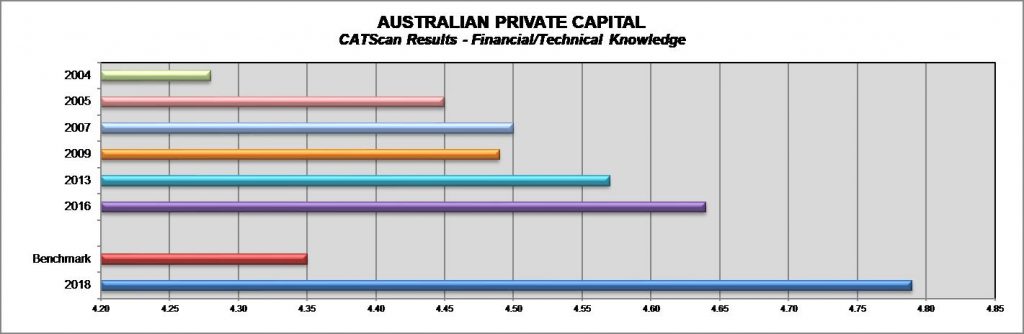
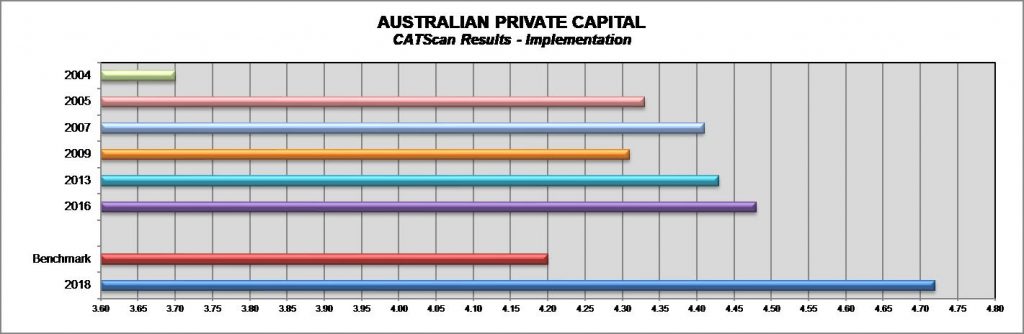
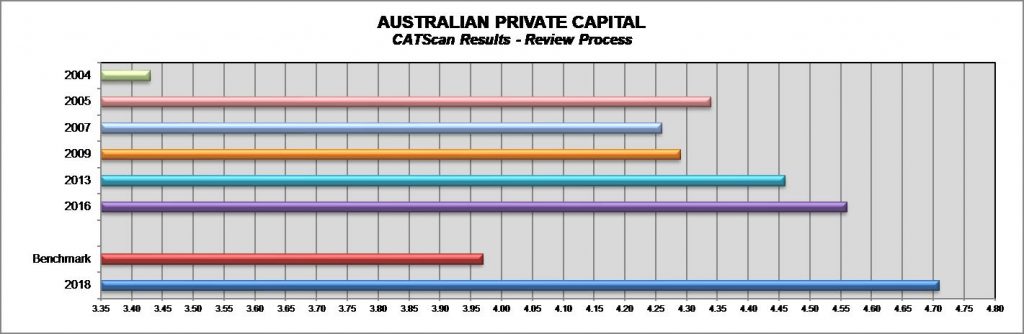
Overall our results were also well up on our 2016 survey.  All scores are out of 5 and some highlights of the survey were;

  • Our response rate was 69% which is phenomenal and well above the national average of between 30%-35
  • 93% of our clients are willing to refer APC to their friends, family and associates which is outstanding and something we are very appreciative of. Our growth only comes from referrals
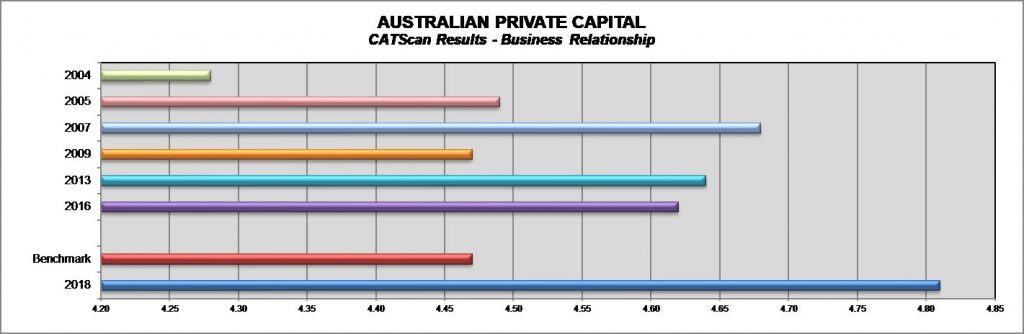
  • APC’s average score across all categories was 4.73 as compared to the benchmark average score is 4.21 which puts APC in the top quartile of businesses in this survey’s national benchmarking group
  • APC’s clients scored us most highly for the Standard of Support Staff with an average score of 4.85. We are very proud of the work Luke, Calypso, Hiro and Petra do in providing excellent service to our clients.  Although the survey refers to ‘Support Staff’ our view is and will always remain that we are all one cohesive team working together to deliver the very best service to our clients and to represent their best interests at all times
  • APC’s second highest scores were 4.81 measuring Business Relationship (which measures the level of trust you feel with APC) and Professionalism (of APC)
  • APC’s greatest result above the national benchmark average was the Financial Review Process or what you would know as our Regular Planning Meetings (RPMs). APC’s score was 4.71 vs the national benchmark average of 3.97.   Our clients continue to tell us that they value our RPMs greatly and feel at the end of our meetings they have real clarity about their overall strategy and how they are tracking to their personal goals


Younger Clients

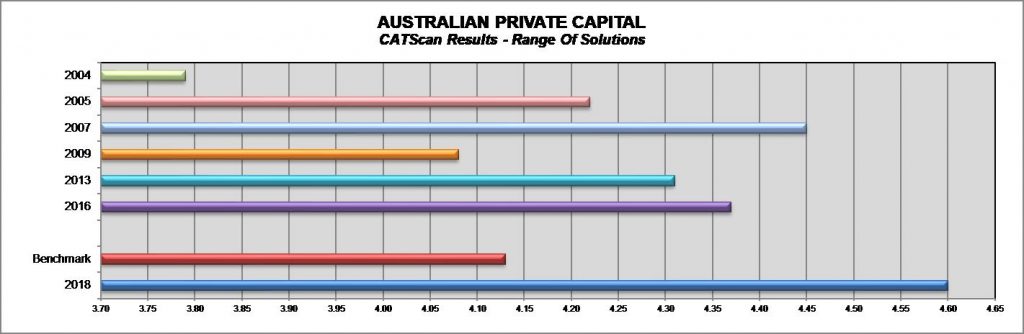
In this survey we scored 4.60 for Range of Financial Services.  Whilst the benchmark average is 4.13 our offering to a younger client has been identified as an area where we would like to improve.  We have been developing our Foundation Client Service which assists a younger person who is post university and/or are early in their working lives.  It is designed to help build good money management behaviours as early as possible.  Many of our clients who have been with APC for many years have said that had they engaged APC earlier in their working lives they would be in an even better position now.

If you would like to discuss the Foundation Client Service and how it may assist your child please contact a member of the APC advice team.

Charts of all 9 Key Areas from our Client Survey


Understanding


Business Relationship


Financial Knowledge


Range of Financial Services


Implementation of Services


Professionalism of Practice


Standard of Support Staff


Financial Review Process


Communication

APC Team News – Luke Price

It is with great pride that APC announces to you that Luke Price is transitioning from his current Para Planning Team Leader role to that of Financial Adviser.

Luke joined APC in 2012 and it was self-evident early on that Luke possessed a great work ethic with a sincere focus on excellent client service.

It won’t surprise you that Luke’s transition to this new role has been in APC’s planning for several years.  APC believes that if our firm can align our business needs with the personal and professional aspirations of our team then we have the best chance of maintaining our team composition as well as having a happy team.  We do not believe that unhappy staff can deliver great service for our clients.

Luke’s new role is that of Financial Adviser and Team Leader.  Over this current financial year he will still have responsibility for the day to day management of APC’s para planning team, however he will also start to manage some client Regular Planning Meetings.

Over the next couple of years he will progressively relinquish his Team Leader responsibilities and move to the role of Financial Adviser full time.

These are very exciting times for Luke who is going to marry his fiancé Amy in January 2019. Amy and Luke purchased their first home together last year and being a passionate Melbourne fan, the Dees first finals campaign in 12 years is icing on the cake.

We are all very proud of Luke.  He is a valued member of our team and we are delighted his professional and personal life is so positive for him.

Congratulations Luke!